dureshewar pashmina shawl by afshan shahid

Design Review

“A Mughal Garden Preserved in Threads.”

A heritage Pashmina shawl conserved.

  • Original textile: pure pashmina shawl, approximately 50 years old.
  • The plain centre of the shawl became moth damaged over time.
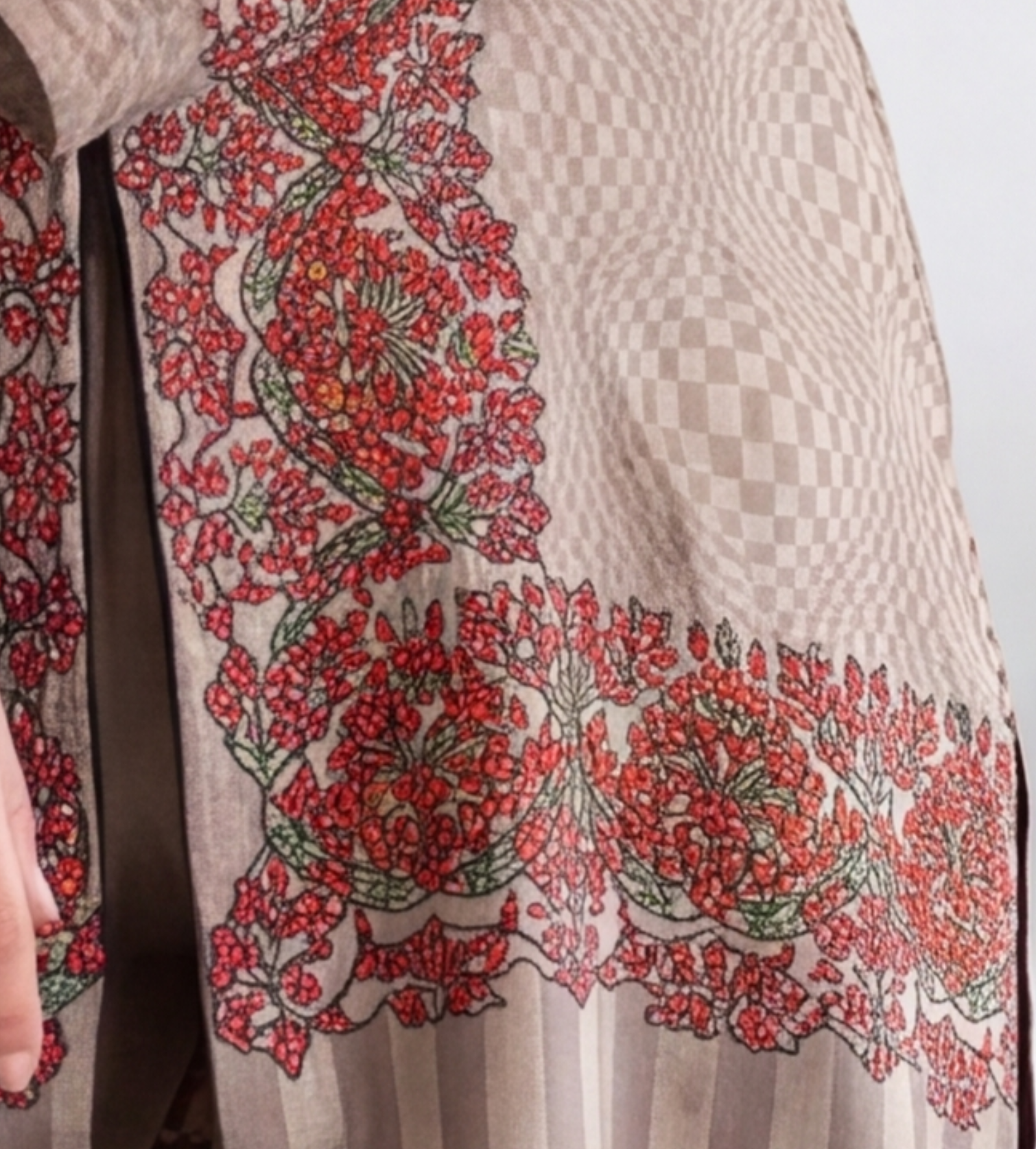
  • The preserved section is the embroidered border from the original shawl.
  • A new shawl fabric was used as the base to support and protect the original embroidery.
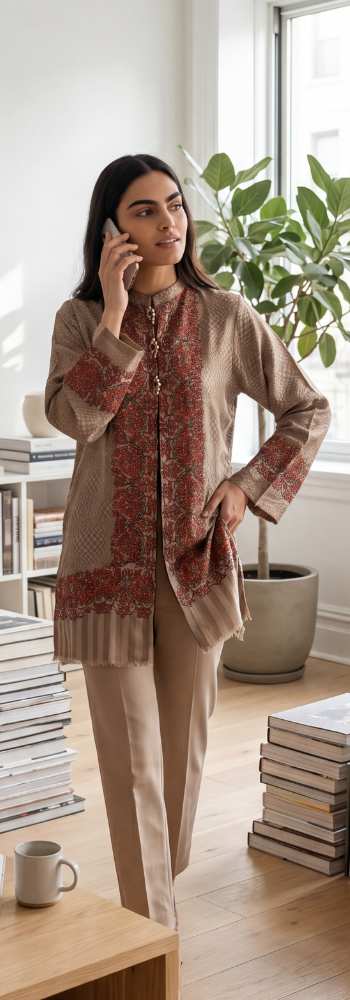
  • The piece was restored and reconstructed as a wearable jacket at House of Subhani.
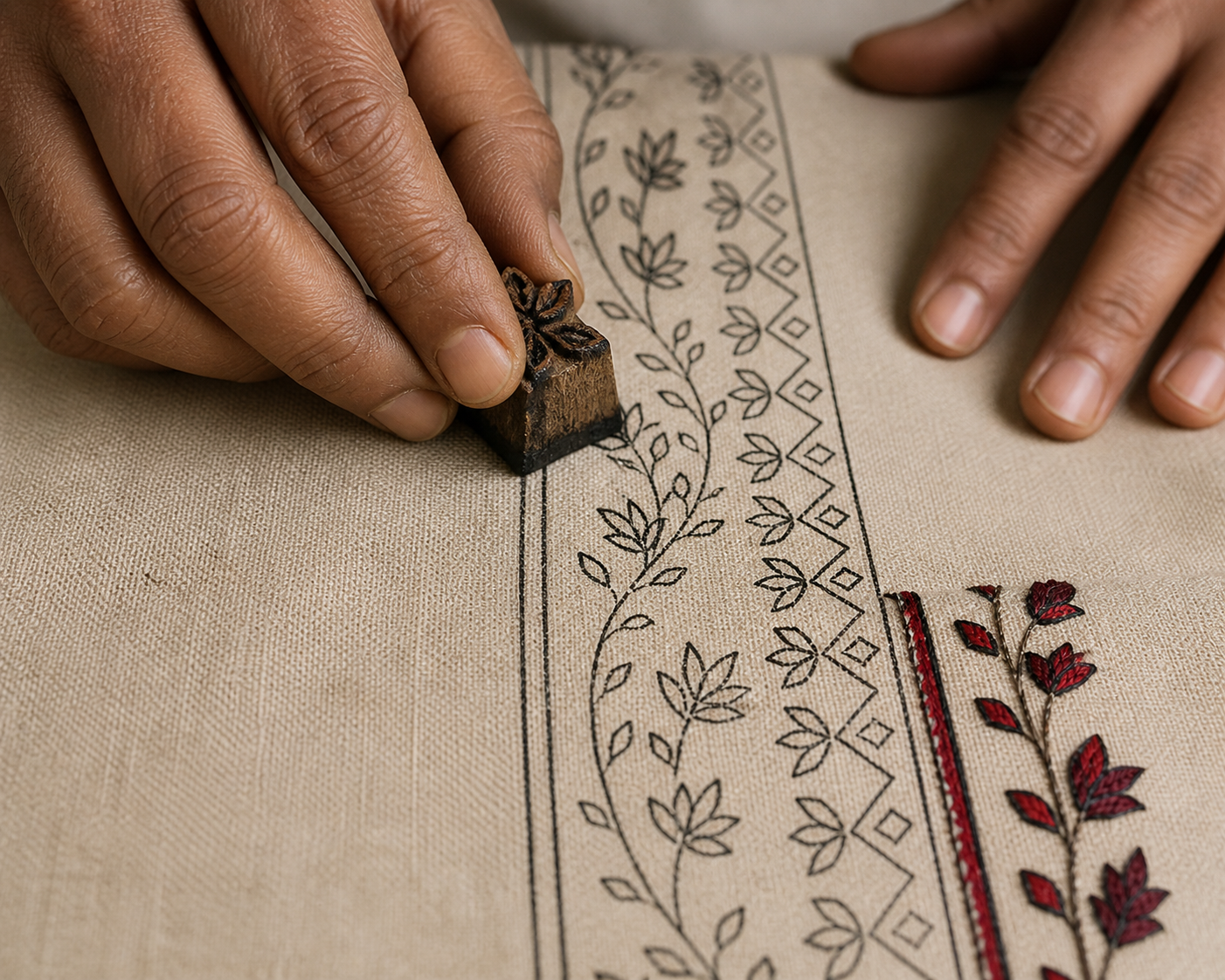
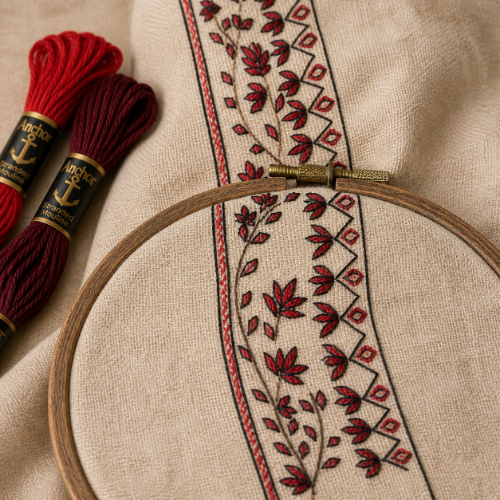
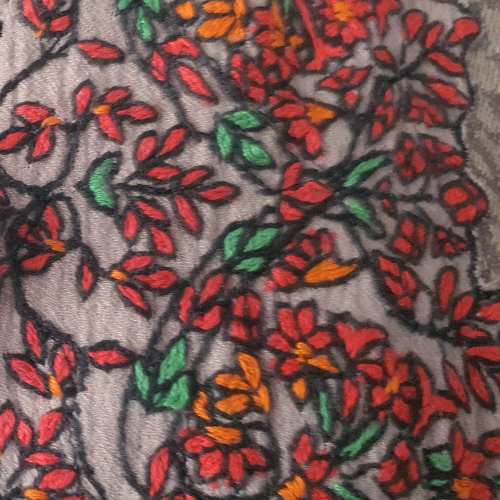
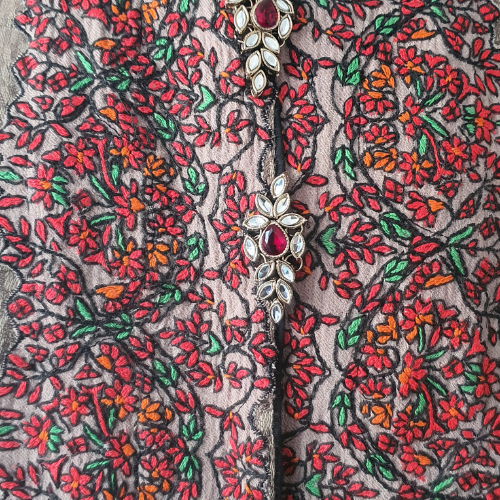
  • Traditional Kashida Kari (کشیدہ کاری) hand embroidery worked over a black block-printed outline.
  • The motifs were first traced using small wooden blocks.
  • The embroidery was worked around all four sides of the original shawl.
  • Border width: approximately 4 inches.
  • Total embroidered length: approximately 9 yards.
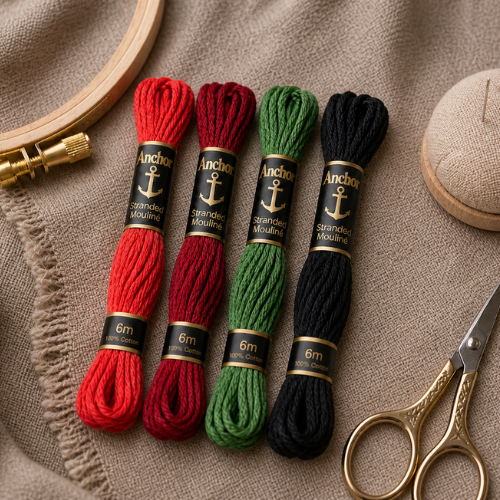
  • Thread: Anchor 6-strand stranded cotton, worked with 2 strands at a time.
  • The embroidery uses classical floral and vine forms associated with Mughal and Persian textile ornament.
  • The damaged centre of the original shawl was removed.
  • The embroidered border was carefully preserved rather than discarded.
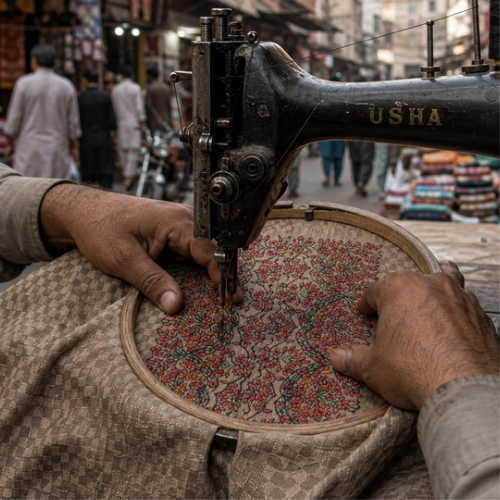
  • The original hand embroidery was machine appliquéd onto another shawl.
  • This gave the old embroidery a stronger base and allowed it to continue as a wearable piece.
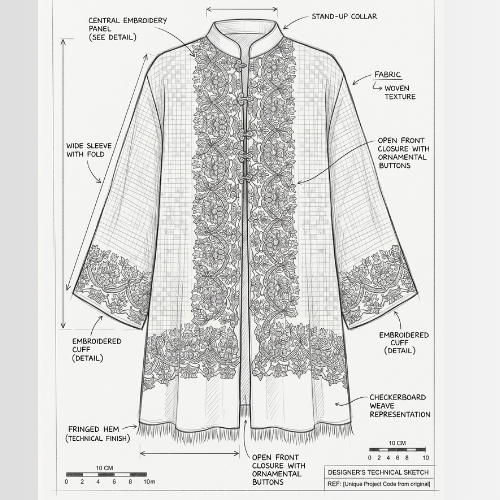
  • The restored textile was then cut and sewn into a jacket.
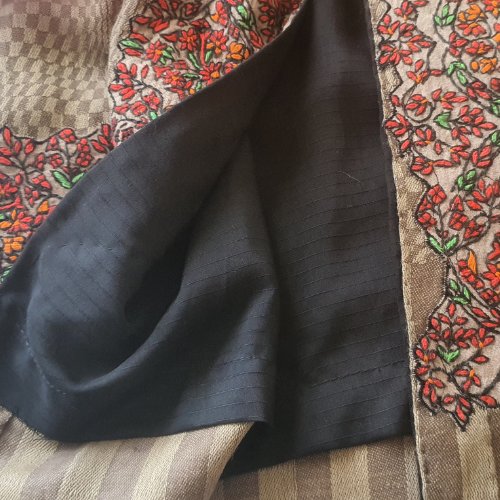
  • A pure silk lining was added inside the jacket, giving the garment a soft finish and helping protect the restored pashmina and appliquéd embroidery.
  • The result is a preservation garment, not a recreated one.
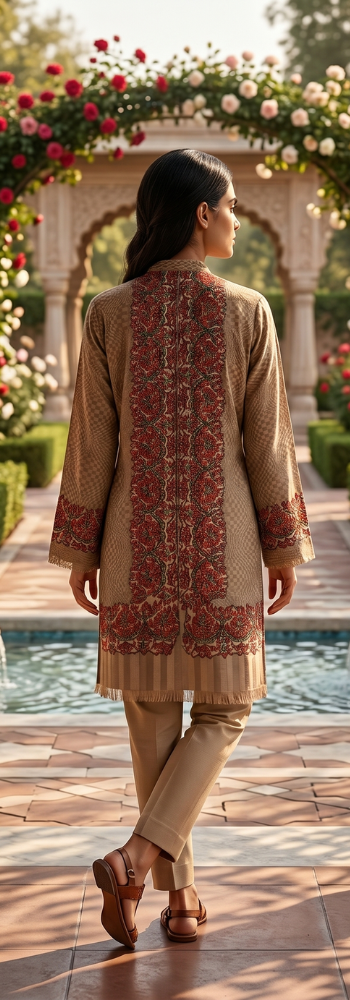
front view duri dr(350 x 1000 px)
block printing outline l dureshewar pashmina shawl by afshan shahid

block printing outline

hand embroidery stitches l dureshewar pashmina shawl by afshan shahid

hand embroidery stitches

thread palette l dureshewar pashmina shawl by afshan shahid

thread palette

technical sketch for house of subhani l dureshewar pashmina shawl by afshan shahid

technical sketch for house of subhani

hand embroidery closeup l dureshewar pashmina shawl by afshan shahid

hand embroidery closeup

appliquÉ reconstruction l dureshewar pashmina shawl by afshan shahid

applique reconstruction

back view duri dj(350 x 1000 px)

Design Journal

“There are textiles that are not simply made, but carried through time.”

Dureshawar began with an old pashmina shawl that belonged to my aunt. It had been part of my family’s story for many years. The fabric had become fragile with time, but the embroidery still held its beauty. I could see patience in every flower, every vine, and every small hand-stitched detail.

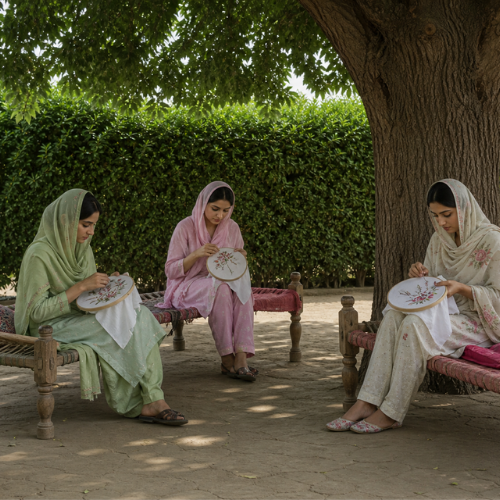
This shawl also took me back to summer afternoons in Faisalabad. I remembered sitting under the shade of shehtoot trees, resting on a charpai, listening to old Indian songs while village girls learnt to embroider with their hands. There was a calmness in those moments: thread, music, shade, conversation, and time moving slowly.

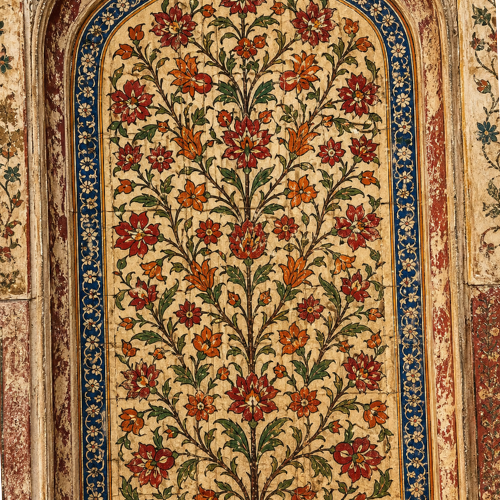
The motifs reminded me of Lahore, Mughal gardens, and the traditional beauty of Kashida kari (کشیدہ کاری). The warm brick red, rust, mustard, soft green, and darker outlines felt like colours from an old courtyard wall, or a garden preserved in thread.

I did not want this embroidery to be lost. It carried memory, family, and skilled handwork. The embroidered sections were carefully preserved and machine appliquéd onto a new pure wool base. A pure silk lining was added inside, giving the jacket softness, strength, and a finished feel.

The stitches carried the soul of the piece. Bharwa Tanka (بھروا ٹانکہ) filled the flowers with a smooth raised surface, while Dandi Tanka (ڈنڈی ٹانکہ) shaped the vines and outlines. These were not only decorative stitches. They were part of a story I wanted to protect.

For me, Dureshawar is about memory, respect, and renewal. It honours my aunt, village life, handmade work, slow fashion, heritage craft, and sustainable handmade clothing. This pashmina jacket is not only a garment. It is a family textile brought forward into wearable art.

embroidering memories l dureshewar pashmina shawl by afshan shahid

embroidering memories

mughal inspiration motifs l dureshewar pashmina shawl by afshan shahid

mughal inspiration motifs

original pashmina embroidery l dureshewar pashmina shawl by afshan shahid

original pashmina embroidery

pure silk lining l dureshewar pashmina shawl by afshan shahid

pure silk lining

corner front dj

corner front

closeup sleeve and border dj

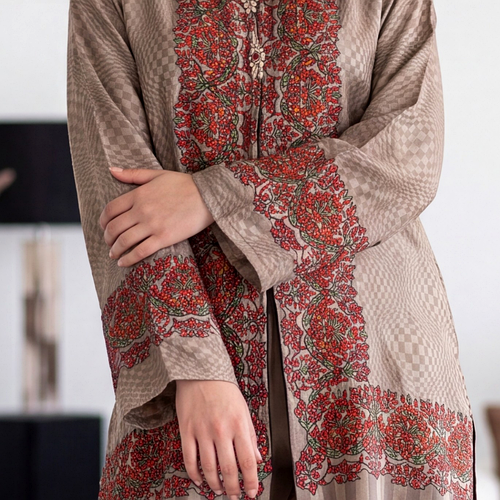
closeup sleeve and border

0 0 votes
Article Rating
Subscribe
Notify of
guest
2 Comments
Oldest
Newest Most Voted
Anonymous
Anonymous
1 month ago

Nc Jacket!!!

Anonymous
Anonymous
1 month ago

Combining traditional hand embroidery with modern construction is a brilliant way to honor and preserve our textile heritage. Truly a work of art.

  • Yarn: Alize Cotton Gold
  • Fibre: 55% cotton, 45% acrylic
  • Bought from: Istanbul
  • Colours: 141 Royal Blue / cobalt blue, 58 Navy, 200 Grey
  • Quantity: 5 balls cobalt blue, 2 balls navy, 2 balls grey
  • Crochet hook: 3.5 mm
  • Chain stitches
  • Treble crochet
  • Double crochet
  • Slip stitch
  • Cluster stitches
  • The main jacket was constructed from two large crochet hexagon shapes.
  • Each hexagon was worked separately, then opened and shaped to form the body and sleeves.
  • The two hexagon sections were joined together to create the main cardigan shape.
  • The neckline was finished with a soft wavy edge, inspired by the movement of the Bosphorus.
  • The cobalt blue open crochet gives the jacket lightness, drape and movement.
  • Cobalt blue forms the main body of the jacket.
  • Navy creates depth and contrast within the motifs.
  • Grey highlights the textured details and softens the design.
  • The colour palette reflects Istanbul’s blue light, İznik tilework and the protective eye symbol.
  • Three different square motifs were made first.
  • Cluster and textured stitches were used to create raised floral and tile-like effects.
  • The motifs were connected together using chain stitches.
  • The joined motif panels were then added to the main jacket.
  • The square motifs create the tile-inspired surface pattern across the back, hem and sleeves.
  • Finished with a handmade eye-shaped tie closure.
  • The tie was made as a replica of Amina’s Eye.
  • It works as both a fastening and symbolic embellishment.
  • A one-of-a-kind crochet jacket combining openwork, texture and cultural memory.
  • The piece sits between slow fashion, handmade fashion and wearable art.
2
0
Would love your thoughts, please comment.x
()
x